CASESTUDIES
/
BLOG
charity: water cut donor acquisition cost from $123 to $98 — without spending more.
−20% CAC. Zero extra budget. Just knowing which channels were actually working.
This marketing mix modeling case study explores how charity: water, a leading nonprofit, transformed its Media Plan approach to achieve significant donor growth.
Who is charity: water?

charity: water has a mission: bring clean and safe water to every person on the planet. Founded in 2006, this nonprofit organization has, as of 2025, raised over $1 billion and provided clean water to over 20 million people worldwide.
charity: water operates with a bold principle: 100% of the funds received from public donations are spent on nothing but funding clean water projects. A small pool of private donors choose to give specifically to cover operating costs and expenses. Public donations from one-time and monthly supporters are a huge focus. Recurring donations are what fuel charity: water’s movement, and acquiring monthly donors is a strategy that relies heavily on paid media.
The Challenge: Overcoming Last-Click Attribution Limitations in Nonprofit Marketing
Prior to adopting Marketing Mix Model (MMM), charity: water assessed marketing performance based on a modified Last Click Attributed model. Its core metric was Return on Ad Spend (more precisely it was projected ROAS, as LTV of donors was factored into the Return part of the numerator).
Like many of its peers, charity: water used to invest most of its marketing budget on bottom-of-the-funnel activities in media like Meta, YouTube and to a lesser extent Paid Search. These activities, based on last-click attribution limitations, often showed great ROAS on the surface. However, these apparent positive numbers can obscure the true impact.
Nonprofit organizations spend 18% of all advertising spend on search. That’s more than what nonprofits spend on awareness advertising overall. And when it came to measuring the performance of awareness advertising, it was extremely challenging.
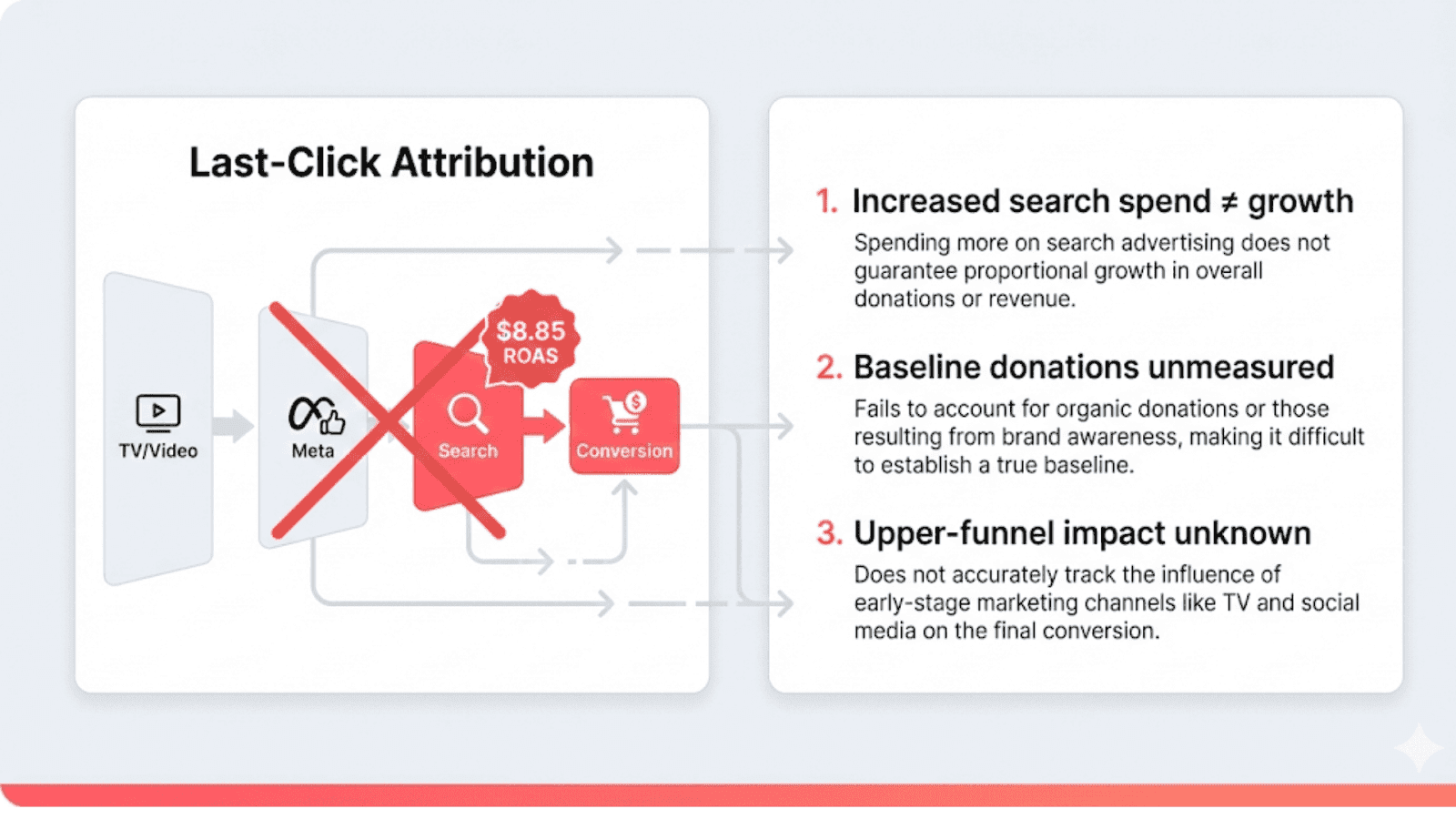
On a last-click basis, Paid Search for charity: water scored a ROAS of $8.85. That meant for every $1 invested in search, it would generate $8.85 in future projected revenue.
However, charity: water faced three real-world challenges that highlighted the inherent limitations of its measurement tooling and the need for a more sophisticated MMM nonprofit marketing approach:
The increased investments in Search did not translate to growth: How many of these donors would have contributed anyway? What was driving people to search?
Even without advertising, charity: water was the recipient of some donations. Some donors were still giving, indicating a baseline effect.
What impact does Top of Funnel or TV advertising have when it comes to overall performance and donor growth strategy?
A Strategic Shift: Embracing Marketing Mix Modeling for a Robust Nonprofit Paid Media Strategy
Switching to the Marketing Mix Model provided a very different view of channels’ performance and marked a significant evolution in charity: water's nonprofit paid media strategy. MMM helped charity: water assess its baseline.
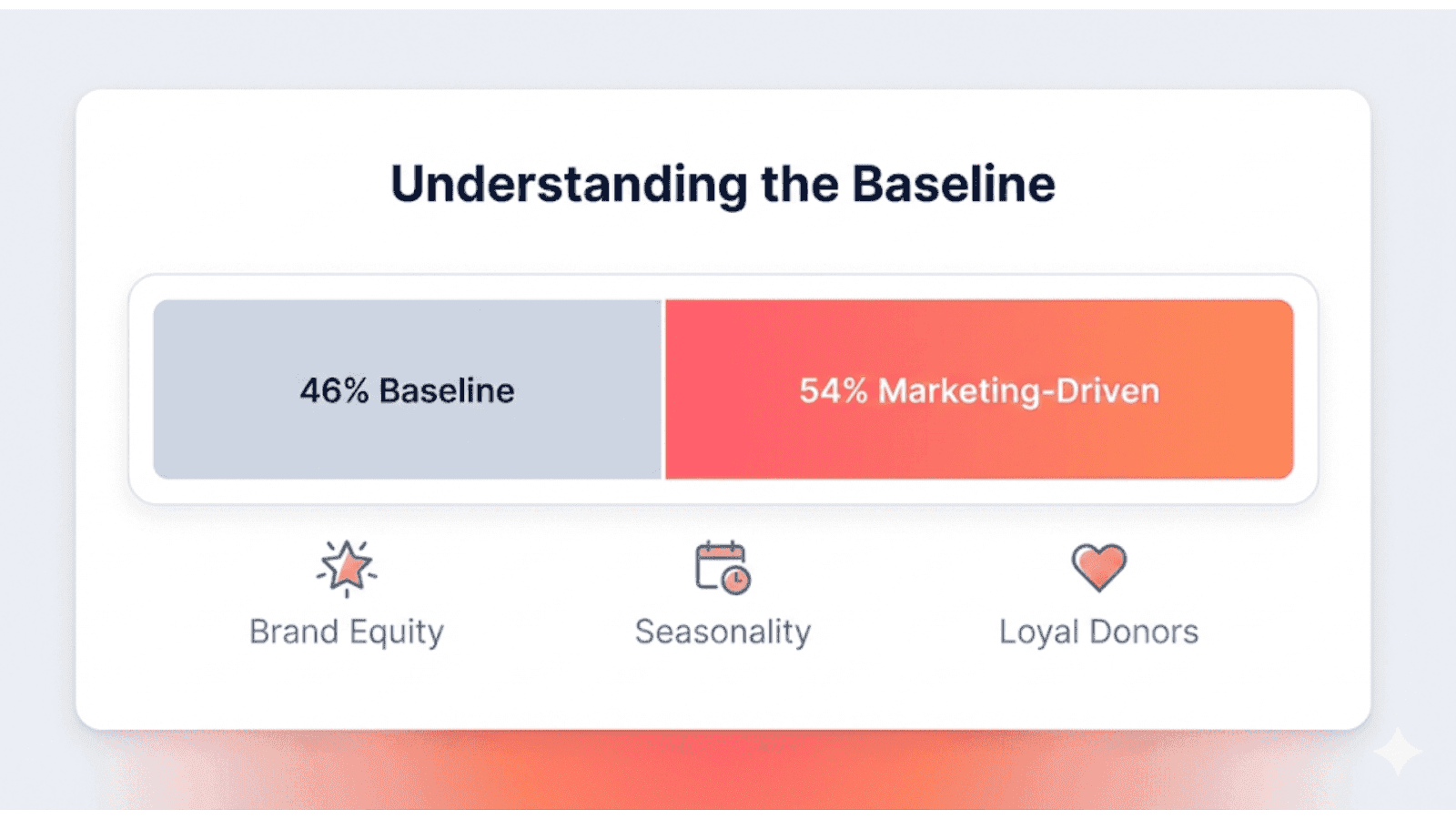
In MMM, the baseline in marketing mix modeling is the portion of all donation activities that occur without any Paid Marketing activities. Think brand equity, seasonality, returning and loyal donors, etc. For charity: water, its baseline accounted for approximately 46% of new donations. Understanding this baseline is crucial for accurately measuring the incremental impact of marketing efforts.
Optimizing Donor Acquisition Cost (CAC) with Full-Funnel Measurement
With a renewed focus on new donations in 2025, charity: water followed MMM-driven recommendations and invested in upper funnel campaigns, leading to significant improvements in its donor acquisition cost (CAC).
This shift towards a full-funnel measurement approach allowed for a more accurate understanding of marketing effectiveness across all stages of the donor journey.
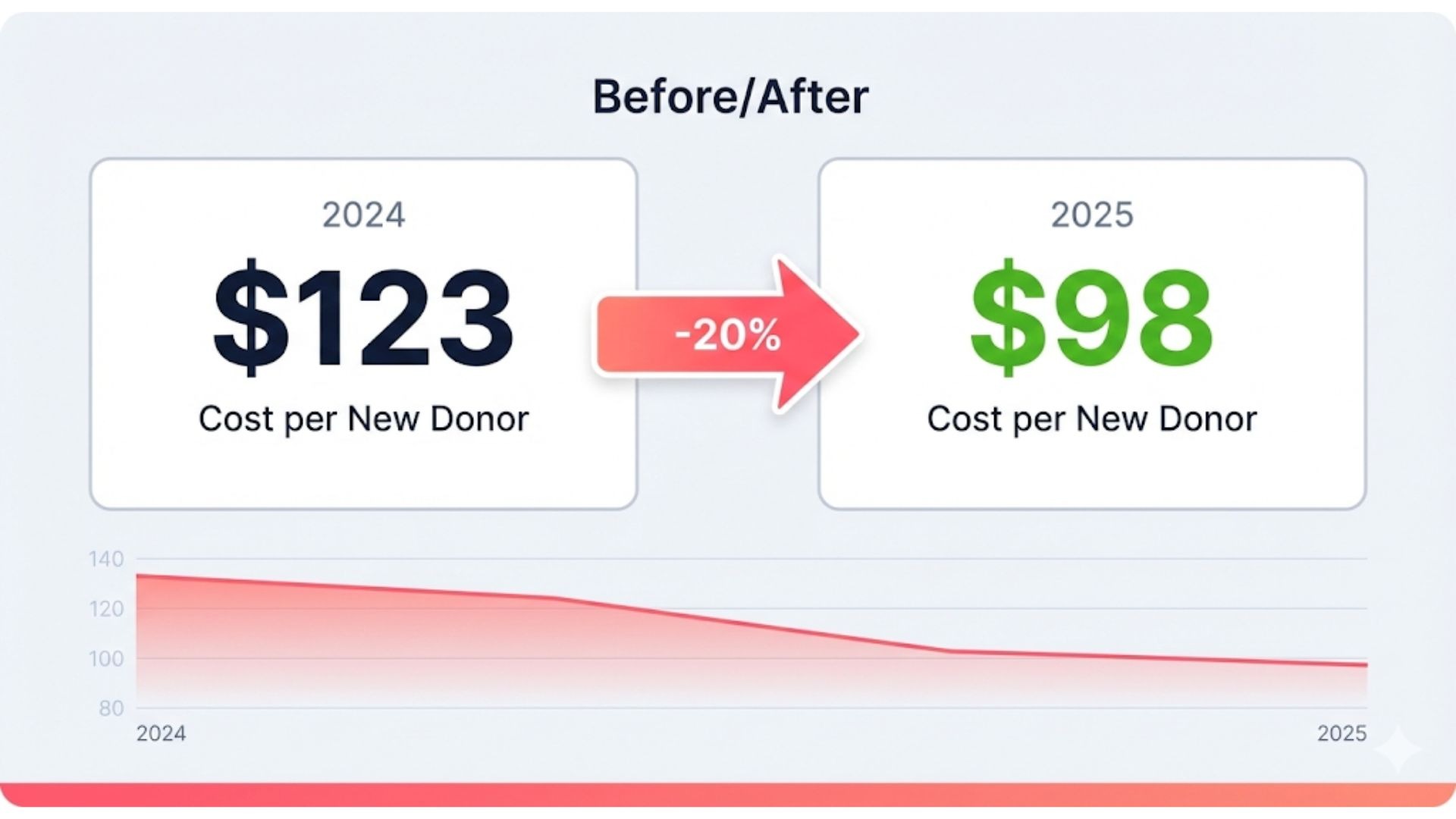
Overall, the Cost of Acquisition of new donors went from $123 in the calendar year 2024 to $98 in the year 2025. This is a reduction of 20%, demonstrating the power of data-driven media planning.
Transforming the Media Plan: Insights into TV + Digital Video Incrementality
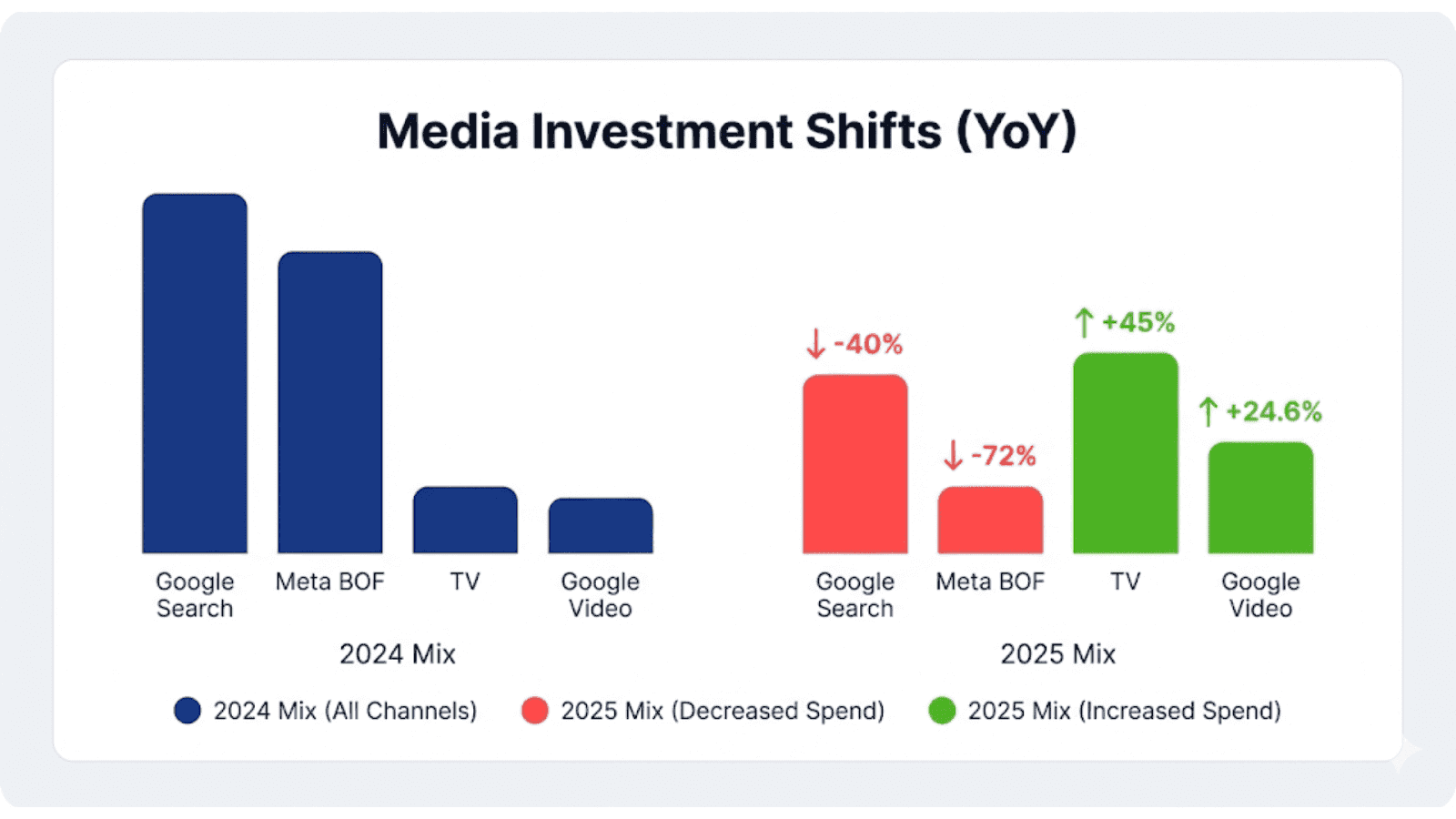
The major investment shifts that occurred with a similar budget Year on Year, as part of this evolving Media Plan case study, were:
A reduction of 40% of Google Paid Search investments and a 72% reduction in Meta Bottom-of-Funnel campaigns ad spend.
An increased advertising investment in TV (+45% YoY) and in Google Video Ads (+24.6% YoY), highlighting the focus on TV + digital video incrementality.
Key Learnings and Impact on Donor Growth Strategy
Implementing changes into the media plan, shifting marketing investments from the overweight bottom-of-the-funnel channels to upper-funnel channels like Online Videos campaigns and TV, was a major strategic shift. Some key learnings from charity: water’s full-funnel measurement and MMM-informed approach, which significantly impacted their donor growth strategy, include:
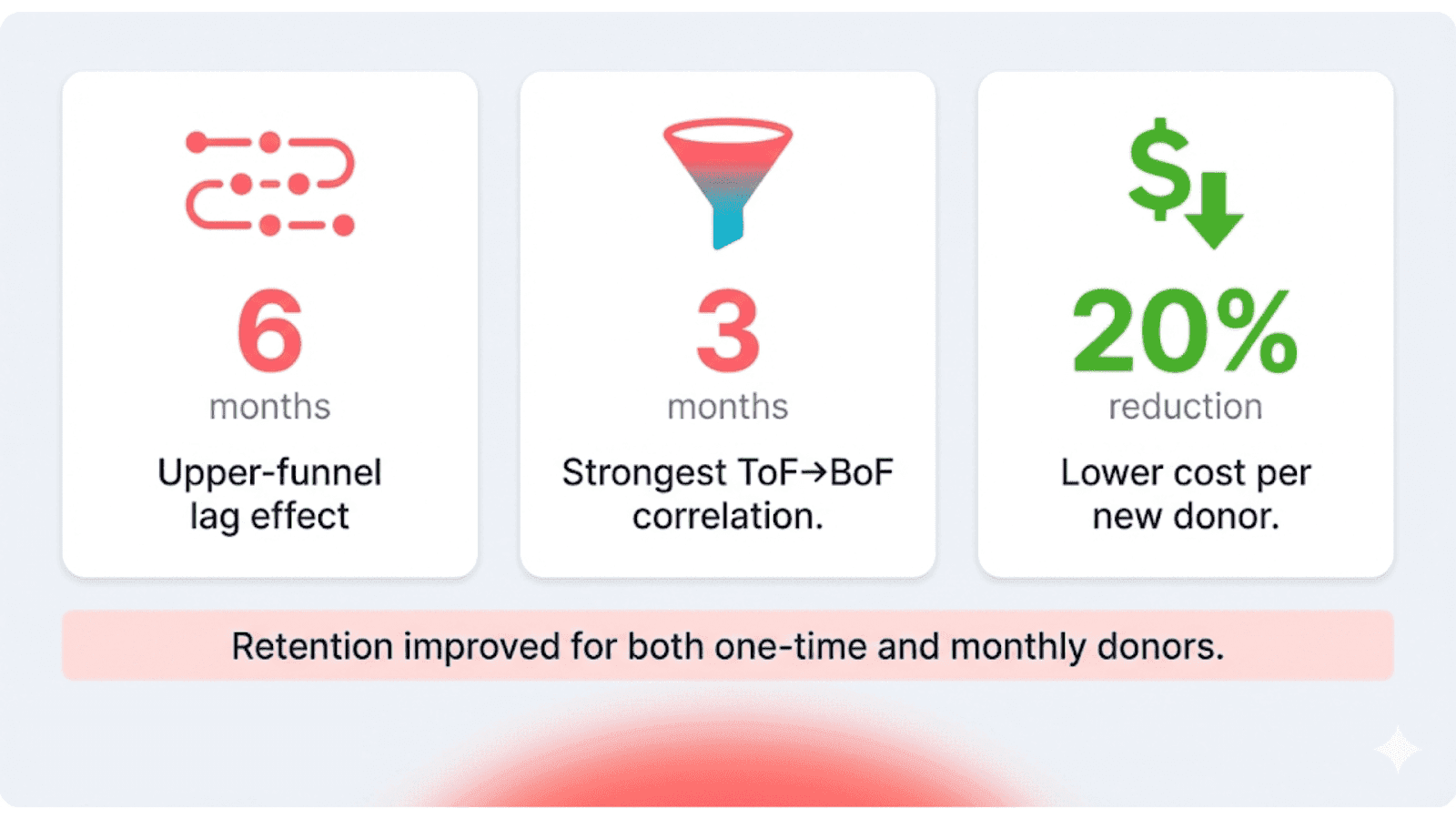
It took up to 6 months for the upper funnel investments to start paying off. This is what we call the lag effect. It is the time it takes for ads to have the full impact on donation or transactions.
The strongest correlation between the Top of Funnel and Bottom of Funnel effect was observed at the 3 months mark.
The major shift resulted in a reduction of 20% of the cost of acquisition of new donors.
They saw a healthy bump in retention for both one-time and monthly donors, further solidifying the long-term benefits of this strategic pivot.
1. M&R US benchmarks available for download @ https://mrbenchmarks.com/charts/advertising
2. Quoted numbers above are from NEW DONATIONS V11.0 model in Cassandra with date range 01.01.2024 to 11.01.2025
3. Resources about the science behind advertising investments explained by Cassandra can be found here.